CRONOS
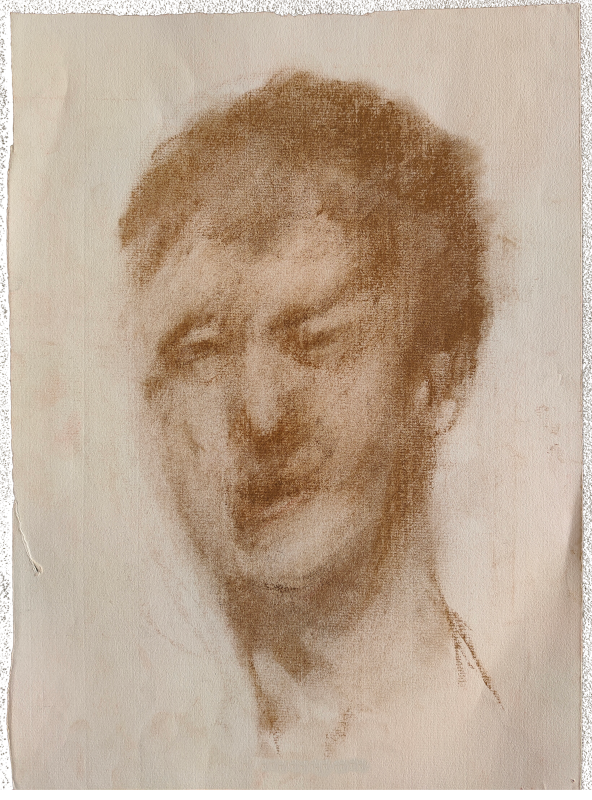
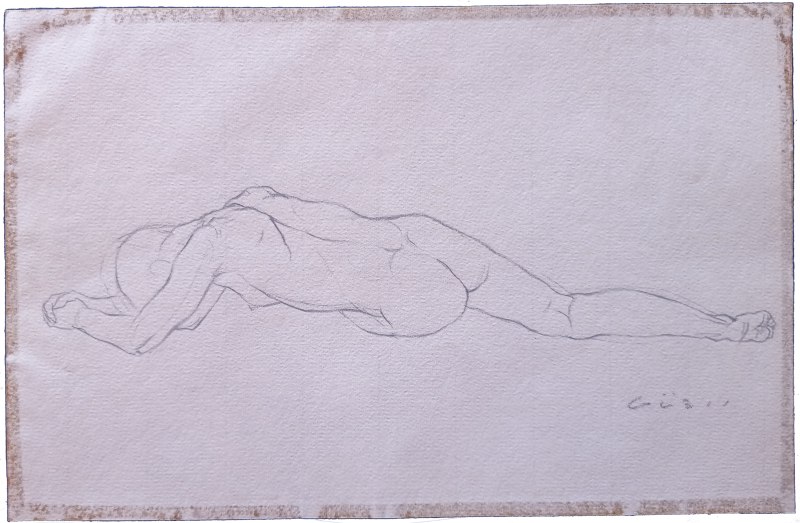
Born in 1973, no degrees or titles are put forward to accredit specially relevant knowledge to explain Jordi Güell’s trajectory. One would simply detail the autodidactic impulse «of a person who, in the 90s, took the so-called BUP, did not finish COU, and who spontaneously has always painted and written».
Since 1991, he has held more than thirty exhibitions in cities such as Valencia, Bilbao, Madrid, or Barcelona. Just as he has shown his work in the USA, the UK, France, and Cuba. And then, while he admits that «unfortunately, the day should have more hours so I could promote myself more», he clarifies later that «equally, without such dedication, the work accomplished could not have been done».
Thus, he shows himself strongly committed to his research, because «I have never been able to dismiss or abandon the pleasure of creating and its utility». Affirming, in this way, a particular nature that seems to survive «despite the difficulty of valuing anything that isn’t first explained with a price».
He also specifies that he does not like to call himself an artist, as this term ‘in our country, unfortunately, adds nothing’ and would only serve a wildcard function. While ‘it serves to categorize,’ he remarks that it also ‘seems to empty of meaning a respectable and respectful way of living,’ even though, he details, ‘it remains exceptionally unknown and uncomfortable.’ Perhaps ‘because it is driven by a sense that differs enormously from the merchant’s mental framework.’
He then states that he would like to call himself an ‘imaginer’ and thus highlight ‘a value and a necessity to imagine, which the citizenry should enjoy uninhibitedly, to feel, closely and freely. Assuming in the first person the co-ownership of the reality that society builds every day.’
At 16, he entered the Llotja School, but the need to complete the degree was never valued, because ‘I trusted myself, I was happy, and it simply made me laugh that a document had been invented to accredit artists.’ At the same time, however, he does remark with emotion having enjoyed a magnificent period at that school, with a teaching staff exceptionally committed to the students.
At Llotja, he felt very fortunate to be a student of very good teachers, such as Andreu Martró, Joan Joan, Francesc Navarro, Gonzalo Bertrán, and Magda Durant. All of them great people to whom he has always felt especially grateful.
2019-2025 Period:
Leading his research to the study of numerous authors, investigations, and scientific articles of international scope within the fields of neuroscience, quantum mechanics, and quantum biology. He thus invests his effort and attention into deepening his particular investigation. From 2019 onwards, he intensified his focus on the parameters that should allow for a concrete definition of the «immaterial object».
Thus, never abandoning this goal throughout these years, this search for the immaterial object has guided his investigation towards the drafting of an analysis that suggests, within the properties and functions inherent to human thought, functions «that seem to transcend computable processes».
Then, by analyzing significant scientific findings gathered from numerous research studies, he seeks a useful coherence to explain processes of organization and pattern creation that would seem to involve both organic and inorganic matter.
In this way, he expands on conclusions already initiated in 2008 in the essay Interface: a Nightingale on the Screen (Interface: un ruiseñor en la pantalla). And from his artistic practice and knowledge of creative processes, he states: «I will now grapple with bringing together the important conclusions gathered from the many scientific studies consulted».
He then affirms that his reflections suggest ‘a spontaneous dynamic in cognition, as it would seem to arbitrate the very existence of the object.’ And thus, as he details, while «traditionally information would have been attributed to the very nature of the object, it would now seem that this could be assigned to organic processes, encoding it according to different circumstances or adaptive needs».
2025
Recerca de la Interfície de cognició III (essay).
2024
Recerca de la Interfície de cognició II (essay).
Recerca de la Interfície de cognició I (essay).
2023
i bon dia dia (Poetry collection).
La fallida de l’empíric 08/01/2023 (Op-ed). (+info)
La nova ontologia 08/01/2023 (Op-ed). (+info)
La creativitat en temps de cíborgs 13/01/2023 (Op-ed). (+info)
El paper de la tecnologia 17/01/2023 (Op-ed). (+info)
Definir la intel·ligència 17/01/2023 (Op-ed). (+info)
La nova alfabetització 23/01/2023 (Op-ed). (+info)
El ciberhumanisme 23/01/2023 (Op-ed). (+info)
La màquina com a indústria d’imitació 24/02/2023 (Op-ed). (+info)
2011-2019 Period:
In 2008, in the essay The Immaterial Product (El Producto Inmaterial), he proposed the application of an ethical value for the economy that should be structured once the subprime crisis and the significant failure of neoliberalism were acknowledged. At the same time, in his articles and essays, he would detail an influence of new technologies that seemed to increase an inevitable process of disintegration of classical empirical reality and the classical object.
Based on the description of this process, in 2010, in the text The Fall of Object and Concept (La Caída de Objeto y Concepto), he suggested an initial analysis of the repercussions, at an economic and social level, of this process of algorithmic disintegration of empirical reality and the classical object.
Already in those years, he would explain the effect that the computing power of new technologies was having on classical physics. Imposing irreversible changes that would affect social structures, the integrity of the market product, and the role of leaders and political organizations in the exercise of governing. Three lines of transformation that, years later, could already be verified by observing the same causality in the transparency imposed by the electric machine in its process of receiving and managing data.
From these two essays, and also incorporating conclusions suggested in the field of neuroscience, a practical search began for the parameters or constants that should allow for the concrete definition of the immaterial object.
Drawing from practical study and the analysis of current social, economic, and political affairs—while always considering the influence of new technologies—his research focuses on the specific constants that should enable the existence of the immaterial object.
2019
2019_VIDEO_068 (+info)
2019_VIDEO_066 (+info)
2019_VIDEO_061 (+info)
2019_VIDEO_059 (+info)
2019_VIDEO_058 (+info)
2019_VIDEO_051 (+info)
2019_VIDEO_049 (+info)
2019_VIDEO_046 (+info)
2019_VIDEO_032 (+info)
2019_VIDEO_031 (+info)
2019_VIDEO_024 (+info)
2019_VIDEO_021 (+info)
2019_VIDEO_014 (+info)
2019_VIDEO_06 (+info)
2019_VIDEO_02 (+info)
2018
2016
2014
Fractality III 31/08/2014 (Op-ed) (+info)
2013
2012
2011
Cognitiva Interface #1 07/10/2011 (+info)
Cognitive Interface #2 07/10/2011 (+info)
Cognitiva Interface #3 07/10/2011 (+info)
Sociedades hipercomplejas #1 09/05/2011 (+info)
Sociedades hipercomplejas #2 09/05/2011 (+info)
Hipercomplejidad: el concepto está abierto 09/05/2011 (Op-ed) (+info)
Ética e innovación en sociedades hipercomplejas 09/05/2011 (Op-ed) (+info)
El sueño o las ideas 09/05/2011 (Op-ed) (+info)
Fractal Matrix (+info)
Hashtag Archive: 2008 - 2012
Between 2008 and 2012, an intense research exercise was carried out on the social network formerly known as Twitter. There, numerous researchers «shared intuitions and conclusions of great relevance regarding renewed interests and new concerns about the possibilities that new technologies and the 2.0 criteria seemed to offer».
There were many shared synergies and interactions, using the HASHTAG as an immaterial object for cataloging and organizing information. Thus, «a complex and interesting archive was created, which is still particularly useful for tracing in detail the chronicle of a series of items that were sensed in those years, and which would now be determining the current structural crisis».
Unfortunately, we can see that some of those links have already been lost:
#fallofJobs, since July 25, 2012 (+info)
#cognInterface, since February 6, 2012 (+info)
#cyborgMind, since February 3, 2012 (+info)
#fallofNationStates, since October 17, 2011 (+info)
#fallofDebt, since September 22, 2011 (+info)
#financialViolence, since September 18, 2011 (+info)
#artificialScarcity, since September 9, 2011 (+info)
#ethicsofAbundance, since September 9, 2011 (+info)
#paradigm20, since June 8, 2011 (+info)
#cognitivecapitalism, since June 7, 2011 (+info)
#procreativity, since June 7, 2011 (+info)
#fractality, since March 20, 2011 (+info)
#openEarning, since January 9, 2011 (+info)
1991-2010 Period:
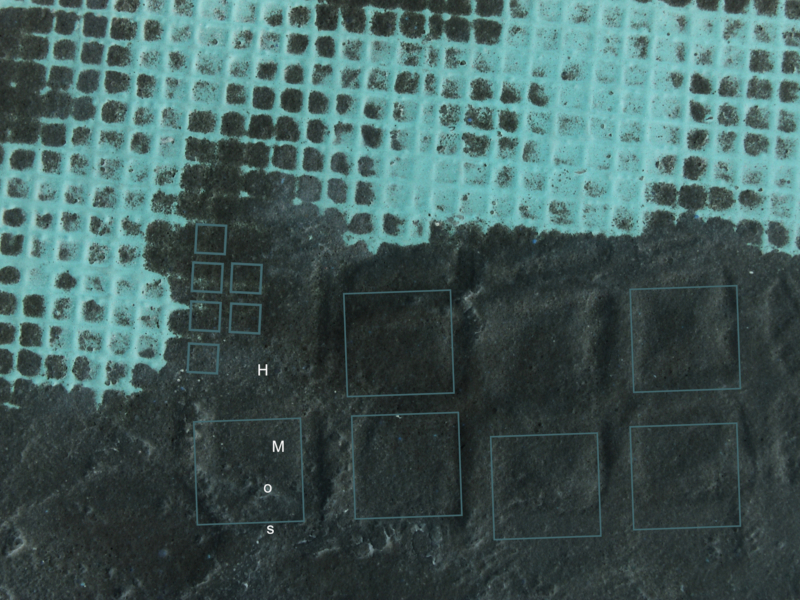
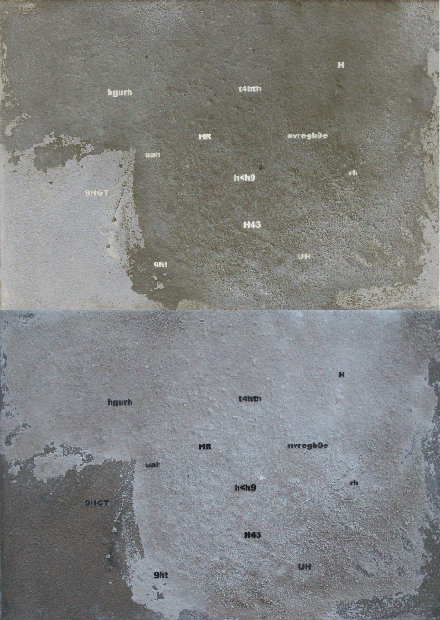
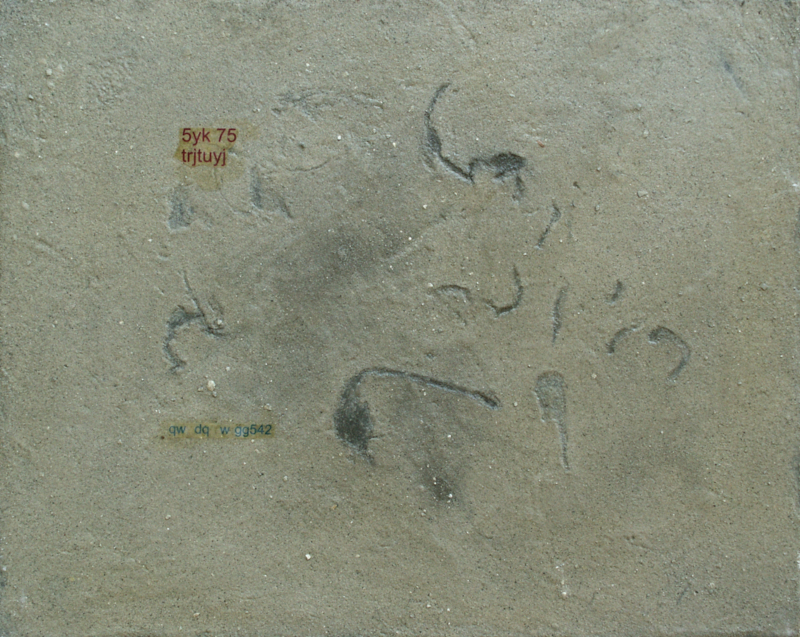
With his first exhibition in 1991, at the Casal d’Extremadura in Sant Boi de Llobregat, he began «from a young and inexperienced emotion, an adventure full of surprises, admirations, and fulfilled illusions». After a few years, that adventure seemed to progressively confront a personal need to encode emotions, to exclude them, to make them disconnected or strange. Manifesting thus «as an unforeseen necessity that ultimately seems to translate into a key element of the work». So, by increasingly incorporating an encoded and specific language—already in those years, from youth and inexperience—he seemed to seek a combination of shyness «with a strange rhetoric that was, in the end, simply curious, young, daring but harmless».
In this way, he seemed to explain a personal need to hide his research within his representations, distancing himself from an environment that «already in those years, felt simultaneously inhospitable and unnecessary».
His interest in focusing his attention, energy, and life-time on what is truly edifying and useful also stands out, progressively and increasingly. This would seem to explain why he felt driven toward the satisfaction provided by the space and time of research, within both the creative and scientific fields.
Already in the early months of 2010, after attempting to balance this ambivalent emotionality, he decided to reserve a significant period of time to deepen his research in an intense, creative way, far from the demands required by the promotion of his work. Thus, noting that «I know from my own experience the fragility and fleetingness of life», it would seem understood that he concludes by reasoning that «there are influences or alterations that I instinctively avoid». Because «they seem to stem from a curious and unhealthy social attraction toward a type of experience designed to be consumed, and also to consume us».
From 1992 until 2010
2010 L’ Etang d’Art Gallery, Bages. France / Taller Galeria Fort, Cadaqués. Espanya / Wingfield Barns. UK / Fundació Tharrats, Pineda. Barcelona, Espanya / Text crític: Procesos hacia la no significación, per Pedro Encarnación Carrizosa (+info) / Assaig Threeinning System: Fractalidad, Open Earning y la caída del Faraón (+info) / 2009 Centre d’Art El Marçó Vell. Centelles. Barcelona, Espanya / Publicació d’obra gràfica. Catalan Writing 6. PEN Català. (+info) / Assaig La comunidad crítica (+info) / Assaig Después del 2009: el producto inmaterial (+info) / Recull de poesies, Sombra en los campos (+info) / Recital de poesia a l’Ateneu de Barcelona, Barcelona. Espanya / Recull de poesies, Acolorides germinar (+info) / Seleccionat en el LVII Concurs de Pintura PREMI CENTELLES, Centelles Barcelona, Espanya. 2008 Museu d’Art Contemporani Conde Duque. Madrid, Espanya / “Humanidad”. Galería Punto Arte, Barcelona. Espanya. (SOLO) (+info) / Text crític: Jordi Güell y la realidad como suma individual de los recursos, de Josep Mª Cadena (+info) / Entrevista a Jordi Güell, de Cecilia Lobel. Comissària i directora de L&B Art+Comunicació. Barcelona, Espanya. (+info) / “Signos y gestos”. World Trade Center Hotel GrandMarina*****, Barcelona. Espanya. (SOLO) (+info) / Sala Torrevella. IV Premi Salou de recerca pictòrica de Salou 2008, Salou. Espanya (+info) / Assaig Interface: El ruiseñor en la pantalla (+info) / Llibre catàleg Encuentros con el Arte Actual de Pintura y Escultura (+info) / 2007 Ateneu de Sant Cugat, amb la col·laboració de Canals-Galeria d’Art. Sant Cugat, Espanya. (SOLO) (+info) / Recital de poesia. Homenatge a Yael Langella. Galeria d’Art Maragall / 2006 Llibre de prosa poètica Manuscrito de las musas (+info) / Assaig A imagen y semejanza (+info) / 2005 Herir al blanco, Galería ADN. Barcelona, Espanya. (SOLO) / Galeria Darby Louise. Barcelona, Espanya / “Barcelona Presence”. Water Tower Place. Chicago, USA (+info) / Reculls de poesia, No puc dar-me enteniments i La paraula és un gest (+info) / Obra per la revista Nexus amb obra de Jordi Güell, Caixa de Catalunya. Espanya. (+info) 2004 Galeria Darby Louise. Barcelona, Espanya / Las piedras dormidas, Galeria Darby Louise. Barcelona, Espanya. (SOLO) / 2003 La mujer S. XXI. Galeria Darby Louise. Barcelona, Espanya / Feria Interart. València, Espanya / Dalí. Pequeño formato. Galeria Darby Louise. Barcelona, Espanya / El entorno de Jesús Lizaso. Bilbao, Espanya / Galería Akka. Valencia, Espanya. (SOLO) (+info) / Llibre de poesia Los ojos sobre el olvido (+info) / Publicació de la poesia Almas al barro per a Jesús Lizaso. En el llibre El símbolo y la obra / 2002 El recuerdo de una mirada. Galeria Darby Louise. BCN, Espanya / Entre yo y la montaña, Galeria Darby Louise. BCN, Espanya. (SOLO) (+info) / Publicació del llibre d’autor Jordi Güell. Entre yo y la montaña (+info) / 2001 The fertile seed, Alliance Française. Chicago, USA / Diàlegs fi de segle. Galeria Darby Louise. BCN, Espanya / Pane Caldo. Chicago, USA. (SOLO) / 509: An American Experience. Instituto Cervantes. Chicago, USA. (SOLO) (+info) / Galería Abad Aguírre. Bilbao, Espanya. (SOLO) (+info) / Darby Louise Cultural Center. Chicago, USA. (SOLO) / Text crític: JG 100110001, per Josep Bracons (+info) / Publicació de la poesia A Jesús Lizaso. Lizaso. Arte y sentimiento. / 2000 SARTC’2000. Ateneu Igualadí. Igualada, Espanya. (+info) / Premis Eclecxis, Galería Olímpica. Fundación Galería Olímpica. Barcelona, Espanya. / Ateneu Igualadí. Igualada, España. (SOLO) (+info) / Casal de Cultura. Matadapera, Espanya. (SOLO) / Sala Salvador Espriu. Viladrau, España. (SOLO) / Ut poesis tacíta pictura est. DL COS. BCN, Espanya. (SOLO) / 1997 Mural per a la Fundació Esclerosi Múltiple. Barcelona. Espanya. (+info) / 1996 Casa de Cultura de Matanzas. Matanzas, Cuba / Sala Ausart. Vic, Espanya / Sala Creus. Terrassa, Espanya (+info) / Fira d’Art de Vilanova. Barcelona, Espanya / Primer Premi Concurs de Pintura de Tiana, Barcelona. Espanya. / 1995 Galería Carme Sala. Molins de Rei, Espanya. / Galería Periferiart. Lleida, Espanya. (SOLO) (+info) / Cercle Artístic de Sant Lluc. BCN, Espanya. / Sala de Cultura de l’Antic Mercat de Sitges. Barcelona, Espanya. / 1994 Feria del Saló de l’Ensenyament. Feria de Barcelona. Barcelona, Espanya. / Galería Manifiesto. Barcelona, Espanya. / Mural per al vestíbul de l’Escola d’Arts Aplicades (LLOTJA) (+info). Barcelona, Espanya. / 1993 Feria del Saló de l’Ensenyament. Feria de Barcelona. Barcelona, Espanya. / Muestra de Arte en Max Center. Hospitalet de Llobregat. Espanya. / 1992 Casal de Extremadura. St Boi de Llobregat. Espanya.